



Optional FR Glove Liner
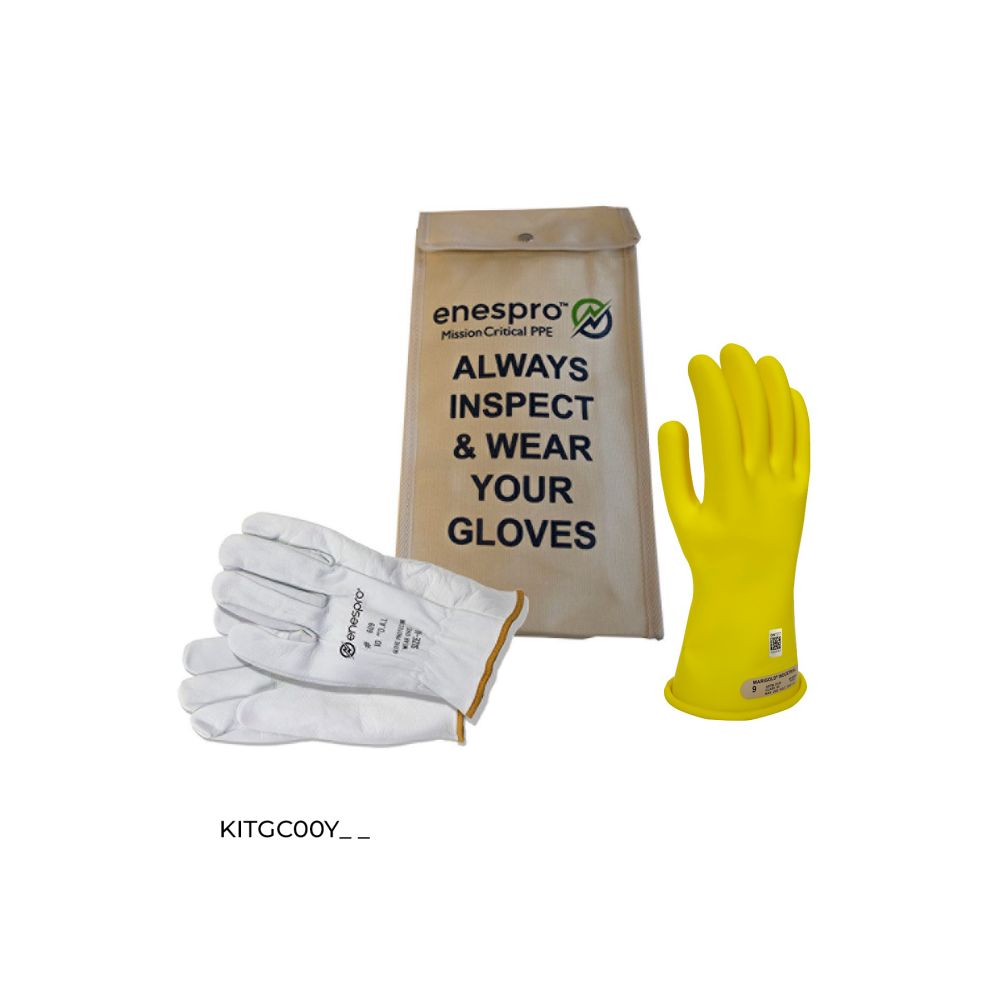
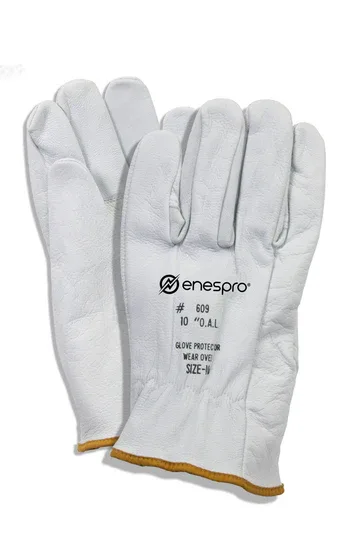
- The FR Glove Liner is an optional addition to the Class 00 Glove Kit - refer thumbnail Image 4 (from L to R).
- Glove Liner can be used as a liner with voltage gloves for added comfort and protection.
- Fabric/Material: Westex® UltraSoft® 6.5oz/220gsm.
- Single-layer hand and double-layer rib knit cuff for flexibility and dexterity.
- ATPV: 12 cal/cm2.
- Compliance: NFPA 70E CAT 2, CSA Z462, ASTM F1506, OSHA 1910.269.
- Colour: Grey.
- Sizes: Regular (RG) fits rubber glove sizes 08 to 11. Large (LG) fits rubber glove size 12.
- Product Number
- G16RG or G16LG (individual units).
- For kits with Glove Liner addition, as per kit Product Number with AG following, for example, Glove Kit Class 00 Type 1 with Yellow insulating glove size 08, Product Number is KITGC00Y08AG.
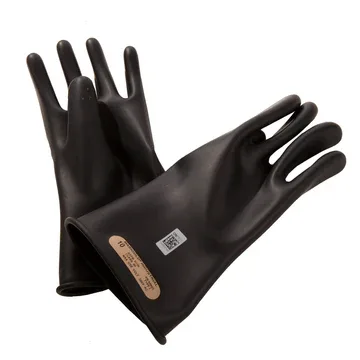
- 11" Long Voltage-Rated Insulating Rubber Gloves.
- Leather Protector Gloves.
- Canvas Glove Bag.
- Colours - Yellow, Red, Black.
- Sizes - 08, 09, 10, 11, 12.
- Product Number
- KITGC00Y08, 09, 10, 11, 12 (Yellow).
- KITGC00R08, 09, 10, 11, 12 (Red).
- KITGC00B08, 09, 10, 11, 12 (Black).
- NFPA 70E (Arc Flash).
- CSA Z462 (Arc Flash Canada).
- OSHA 1910.269.
- ANSI/ASTM D120.
- Maximum Use Voltage AC - 500V.
- Maximum Use Voltage DC - 750V.
- Newly electrically tested and stamped with the initial test date before shipment.
- Should be worn with leather glove protectors to increase life span.
- Sharp objects such as jewellery can puncture or damage rubber gloves and therefore should not be worn while wearing rubber voltage-rated gloves.
- Immediately clean gloves that have come into contact with chemicals, especially petroleum based products.
- Wash with mild soap. Air dry, keeping gloves away from direct sources.
- Store gloves flat in a protective bag. Do not fold gloves.
- If contaminants cannot be removes after laundering, it is best to discontinue use of the gloves.
- Inspections should occur before each use. Inspection methods are outlined in ASTM F 1236.
- Read the garment label and launder per the instructions on the garment label.
- Machine wash on warm with maximum settings to 140° F / 60° C. Use a mild detergent. Tumble dry on medium setting.
- DO NOT: iron, use chlorine bleach, use hydrogen peroxide, fabric softener or starch.
- Wash according to the instructions above to remove any contaminants in order to maintain fabric performance when the garment becomes soiled with dirt, grease, oils etc.
- If contaminants cannot be removed after laundering, it is best to discontinue use of the garment.