

Specifications For Class 00, 0 and 2 Voltage-Rated Insulating Rubber Gloves
Class Types, Voltage Rating and Label Colour of Voltage-Rated Insulating Rubber Gloves
Voltage-Rated Insulating Rubber Gloves (often called Rubber Insulating Gloves or RIGs) are specialised Personal Protective Equipment designed to protect workers from electric shock by providing a non-conductive, dielectric barrier between the user's hands and energised electric components. They are considered the most critical PPE for live-line work.
Glove Type Definitions:
- Type I - Identifies gloves manufactured from natural rubber, which is not resistant to ozone.
- Type II - Identifies gloves manufactured from synthetic rubber, which is resistant to ozone, oil and acid.
- Composite Gloves - Identifies gloves, which combine electrical insulating properties with mechanical protection (cuts, tears, punctures) in one, often removing the need for separate leather protectors.
Class
- Class 00
- Class 0
- Class 1
- Class 2
- Class 3
- Class 4
Voltage Rating
- Maximum Use Voltage 500V AC / 750V DC
- Maximum Use Voltage 1,000V AC / 1,500V DC
- Maximum Use Voltage 7,500V AC / 11,250V DC
- Maximum Use Voltage 17,000V AC / 25,500V DC
- Maximum Use Voltage 26,500V AC / 39,750V DC
- Maximum Use Voltage 36,000V AC / 54,000V DC
Label Colour
- Beige
- Red
- White
- Yellow
- Green
- Orange
The colour-coded label on insulating rubber gloves signifies their electrical protection class and maximum voltage rating. These labels are standardised by ASTM D120 to allow workers to quickly identify if the glove is appropriate for the voltage they are working with.
Key Usage Requirements (ASTM / OSHA)
- Leather Protectors: Insulating rubber gloves must typically be worn with leather protector gloves to prevent damage from cuts, abrasions and punctures.
- Air Test: Insulating rubber gloves should be inspected and tested for air leaks (Inflation Test) before each use.
- Periodic Testing: Per ASTM F496 and OSHA 1910.137, insulating rubber gloves must be electrically re-tested at least every 6 months.
- Inspection: Before use, the user must check for cuts, tears, punctures or physical damage.
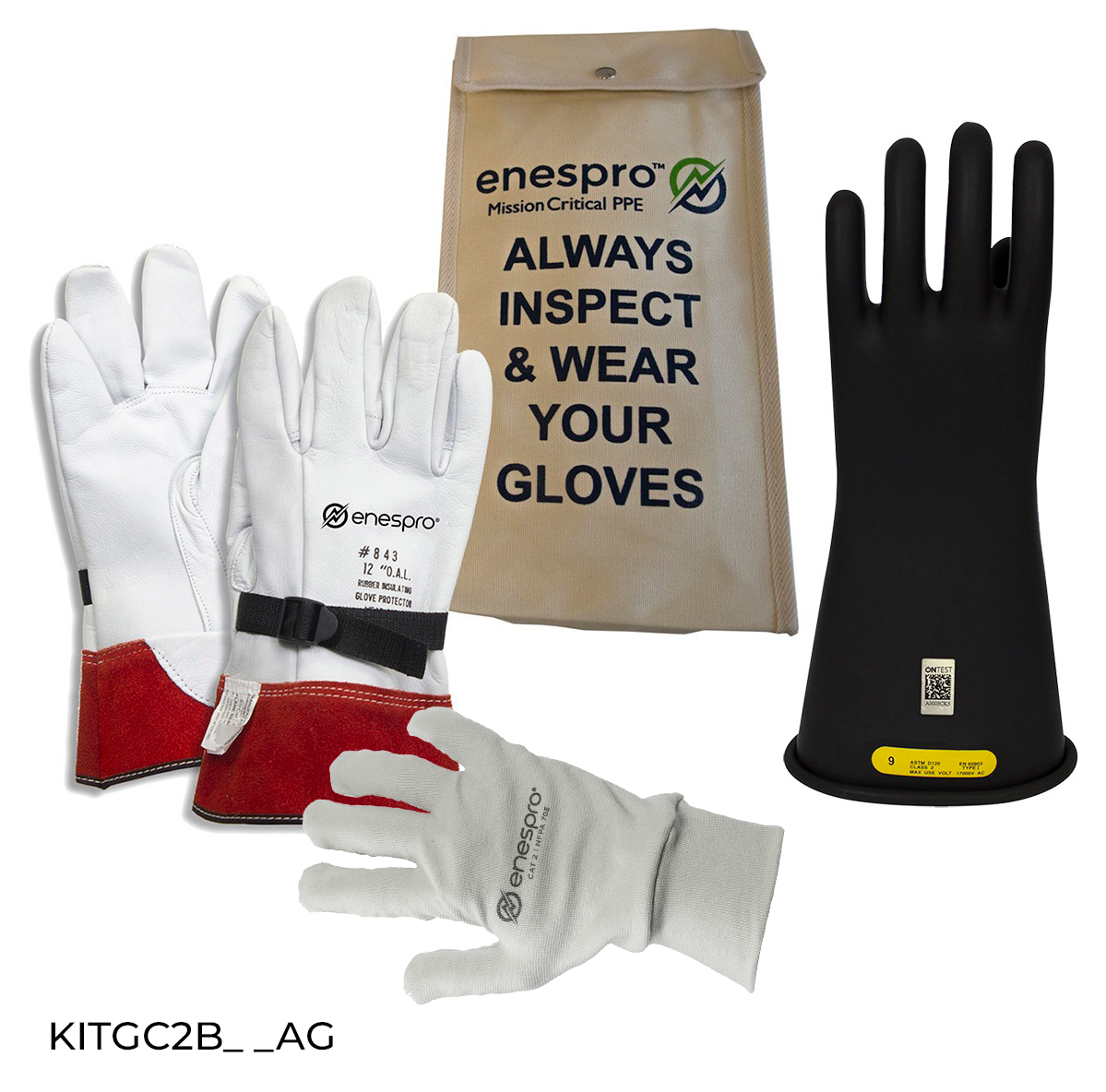
ENESPRO® Class 2 Voltage-Rated Glove Kit w/ Optional FR Glove Liner ►
Regulatory Standards

Insulating Rubber Gloves and Rubber Sleeves are Essential PPE for High-Risk Environments
- ASTM D120: This is the standard specification for insulating rubber gloves designed to protect workers from electrical shock and arc flash. It defines requirements for materials and testing, including Types I (non-ozone resistant) and II (ozone resistant) across six classes (00 - 4) based on voltage protection levels.
- ASTM F496: This is the standard specification for the in-service care, inspection, testing and use of insulating rubber gloves and sleeves to protect workers from electrical shock. It mandates regular, periodic re-testing (up to every 6 months for gloves in use), proper storage and inspection for damage, ensuring compliance with OSHA regulations. Sleeves are usually re-tested every 12 months or immediately if they have been subjected to damage.
- IEC 60903: This is the international standard, which specifies the international requirements for electrical gloves and mitts designed to protect workers against electrical shock during live working. Gloves must undergo strict testing for electrical, mechanical, thermal and chemical resistance.
- OSHA 29 CFR 1910.37: This regulation requires electrical protective equipment to be rated for the voltage to which a worker is exposed.